UTV Towing Capacity: Chart, Limits, and 5 Tips for Heavy Loads
Sep 07 2026
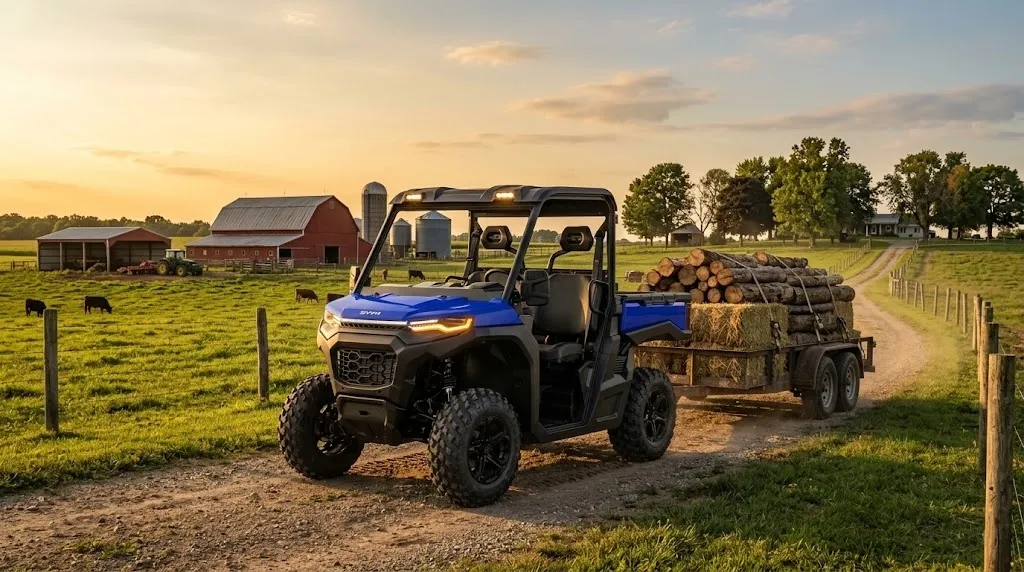
Let’s be honest. When you’re shopping for a utility vehicle, one number probably matters more than any other: UTV towing capacity.
It’s the maximum weight your machine can safely pull behind it. For most standard Utility UTVs, that number usually falls somewhere between 1,000 and 2,500 lbs. But here’s the thing—it’s not just a random number the marketing team came up with. Manufacturers calculate this based on engine size,
frame design, transmission strength, and braking power.
Understanding what that number actually means for your daily work? That’s the difference between a machine that lasts for years and one that ends up in the repair shop with a blown transmission before the season is over.
1. How Much Towing Capacity Do Most UTVs Need for Work and Recreation?
Here’s the golden rule of buying a UTV: match the tow rating to your actual workload. Overestimate your needs, and you waste money. Underestimate them? That’s where the real trouble starts.
If you try to pull a heavy trailer with an underpowered machine, a few things happen. The engine strains. The CVT belt slips and overheats. And on a downhill slope? Your braking distance stretches out way longer than you'd expect. Not a good feeling.
Let’s break down what different towing limits actually look like in the real world:
Light Utility & Yard Work (1,000 lbs – 1,500 lbs)
This is your everyday runaround level. Think small garden trailers full of dirt, lightweight mowers, hauling a deer out of the woods, or towing a small water tank. Machines in this class are built for residential chores and lighter property maintenance. They're nimble, but they're not workhorses.
Medium Farm & Forestry Work (1,500 lbs – 2,000 lbs)
Now we’re talking serious capability. This range gives you enough muscle for a fully loaded trailer of wet firewood, medium-sized seeders, livestock feed racks, or a front-mounted snow blade. These are the kinds of common UTV uses that demand real pulling power — and this class handles them without breaking a sweat.
Heavy Commercial & Construction (2,000 lbs – 2,500 lbs+)
These machines are the heavyweights. They're built for extreme industrial hauling and serious team operations. We're talking gravel trailers, mini-excavator movers, and full-size work rigs like the high-torque SWM Nomader 850 series. If you’re on a construction site or a big farm, this is the category you’ll be looking at.
2. Side-by-Side UTV Towing Capacity Comparison Chart
To help you compare at a glance, here’s a clear breakdown of standard towing capacities and cargo bed payloads across the five main UTV classes. This covers everything from small recreational models to full-blown commercial machines.
UTV Class / Model Type | Typical Towing Capacity | Cargo Bed Payload |
Youth / Recreational UTV | 500 lbs – 1,000 lbs | 200 lbs – 400 lbs |
Mid-Size Utility UTV | 1,000 lbs – 1,500 lbs | 500 lbs – 800 lbs |
Full-Size Utility UTV | 1,500 lbs – 1,830 lbs (830 kg) | 800 lbs – 1,000 lbs |
Heavy-Duty Commercial UTV | 2,000 lbs – 2,500 lbs+ | 1,000 lbs – 1,500 lbs |
3. What Determines UTV Towing Capacity and Maximum Tow Rating?
A lot of people think horsepower is everything. It’s not. Your UTV’s tow rating is really about how strong the hardware is underneath the bodywork.
When you’re pulling a heavy load from a dead stop, that’s all about low-end grunt, chassis stiffness, and keeping things cool under pressure. Here’s what actually matters:
Engine Torque (Low-End Power)
Bigger engines, like V-Twin setups, produce more low-end torque. That’s the rotational force that gets a heavy, stationary trailer rolling without stalling. If you're pulling heavy farm gear up a muddy slope, torque matters way more than peak horsepower.
Heavy-Duty Chassis Frame
The frame is the skeleton of your UTV. It absorbs the twisting forces generated by a heavy trailer. Thicker, tubular alloy steel frames prevent bending or cracking when you’re hauling loaded trailers over rough, uneven ground.
CVT Low Gear (L Range)
Your CVT uses a belt and variable pulleys to transfer power to the wheels. Shifting into Low range changes the gear ratio to give you more mechanical advantage. This reduces belt slippage and overheating when you’re starting out with a heavy load or crawling along at low speeds.
Receiver Hitch & Four-Wheel Hydraulic Brakes
The 2-inch receiver hitch is your connection point, but stopping that weight is just as important. Four-wheel hydraulic disc brakes provide the stopping force needed for heavy trailers. This combo keeps your trailer secure and gives you controlled braking on steep downhill sections.
4. Towing Capacity vs. Payload Capacity: What Is the Difference?
Here’s a mistake a lot of people make. They confuse towing capacity with payload capacity. They are not the same thing, and mixing them up can overload your rear suspension and make steering unpredictable.
Towing Capacity is the total weight your UTV can pull behind it on a wheeled trailer. For instance, hauling an 1,800 lb trailer uses up your towing capacity.
Payload Capacity is the vertical weight your UTV can support on its structure. That means everything on the machine itself: the driver, passengers, tools in the bed, and any accessories you’ve bolted on.
The Tongue Weight Rule
Tongue weight is the downward force the trailer coupler puts on your UTV's hitch ball. As a rule of thumb, tongue weight should be about 10% to 15% of the trailer's total weight. And here’s the catch: that downward pressure counts against your UTV's payload capacity. Too little tongue weight, and the trailer sways dangerously at speed. Too much, and your rear suspension is overloaded.
5. 5 Tips to Tow Safely with Your UTV
Towing safely isn't just about horsepower. Weight distribution, gear choice, and driving habits—those are what actually matter. Even a strong UTV can get unstable if the trailer sits unbalanced.
Tip 1: Check Your Total Weight Limits
Start with the total. Add the empty trailer weight to the cargo. That combined number must stay below the manufacturer's tow rating. Exceed it even by a little, and the drive belt overheats. The transmission strains. Repairs get expensive.
Tip 2: Balance Cargo Using the 60/40 Rule
Put roughly 60% of the load ahead of the axle. The other 40% goes behind. That keeps tongue weight right. Flip those numbers? The trailer sways. Especially at speed. Not safe.
Tip 3: Secure Loads with Heavy-Duty Ratchet Straps
Get straps with a proper load rating. Don't skimp. Anchor them to the frame, not just the bed rails. Sharp turn? Sudden stop? Shifting cargo changes your center of gravity instantly. Bad news.
Tip 4: Drive in Low Range and Brake Early
Hauling heavy off-road? Shift into Low. Less belt slip. Better control. Go slow. Double your stopping distance. At least. Regular UTV maintenance for heavy work helps too. Belts and brakes last longer if you stay on top of it.
Tip 5: Adjust Tire Pressure and Suspension Settings
Before you hook up, inflate tires to the manufacturer's tow pressure. Check rear suspension as well. Add a little preload. That stops the rear from sagging. And keeps steering responsive.
Conclusion
Understanding your UTV towing capacity isn't just a number on a spec sheet. It affects safety, machine reliability, and your repair budget. Match the rating to your actual jobs—yard chores or heavy construction—and your daily work gets simpler. If you need more pulling power, the SWM Nomader UTV series offers official ratings and specs you can review.
-
Sep 09 2026
learn more
 ATV Payload Capacity Guide: What You Need to Know
ATV Payload Capacity Guide: What You Need to Know
ATV Payload Capacity Guide: What You Need to Know
-
Sep 07 2026
learn more
 How Long Do ATV Batteries Last? 5 Crucial Factors & Lifespan Guide
How Long Do ATV Batteries Last? 5 Crucial Factors & Lifespan Guide
How Long Do ATV Batteries Last? 5 Crucial Factors & Lifespan Guide
-
Sep 07 2026
learn more
 UTV Towing Capacity: Chart, Limits, and 5 Tips for Heavy Loads
UTV Towing Capacity: Chart, Limits, and 5 Tips for Heavy Loads
UTV Towing Capacity: Chart, Limits, and 5 Tips for Heavy Loads
-
Sep 04 2026
learn more
 Do ATVs Have Titles for New Vehicles in the US?
Do ATVs Have Titles for New Vehicles in the US?
Do ATVs Have Titles for New Vehicles in the US?